Black and White Sculptural Wall Art — Why Texture Doesn't Need Color

People assume texture needs color to feel alive. I don't think that's true — and my black and white pieces are where I test that idea the hardest.
Every piece starts the same way, regardless of palette: acrylic, a piping bag, and no real plan. I build in layers and let gravity and drying time do half the work. Strip the color away and what's left is the part I actually care about most — the structure. The peaks, the collapses, the way one layer sits against another. Black and white doesn't hide that. It puts it on display.

When You Remove Color, the Texture Has to Do the Talking
With no palette to lean on, every decision becomes about form — how deep a ridge goes, how sharp an edge stays, how much shadow a surface can hold. I don't paint landscapes and I don't work from photographs of anywhere specific. But nature is still the reference underneath it — not as a subject, as a logic. The way contrast and rhythm show up in bark, in stone, in the way light hits an uneven surface. Black and white just makes that logic impossible to miss.
The Part I Care About Most: You Wanting to Touch It
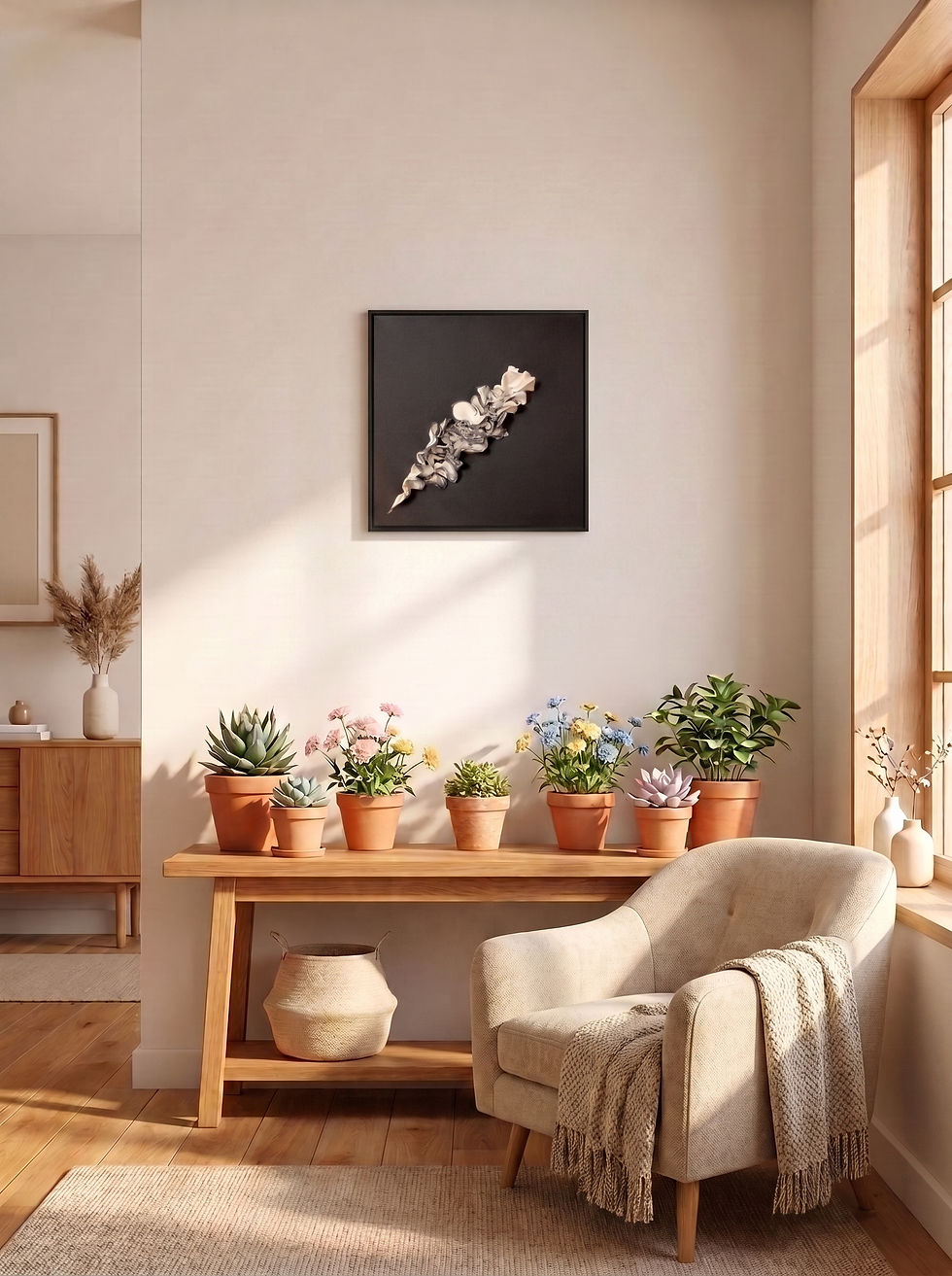
I build in relief on purpose, and it matters even more without color pulling focus. The same piece looks completely different at 9am and at 6pm, purely from how light falls across the ridges and troughs. That's not an accident — I want the work to feel alive in a room, not static on a wall.
And honestly, I want people to want to touch it. Even if they don't. Without color to look at, that pull toward the surface — that curiosity about how it was built — becomes the whole experience.
Why Acrylic, Why This Method
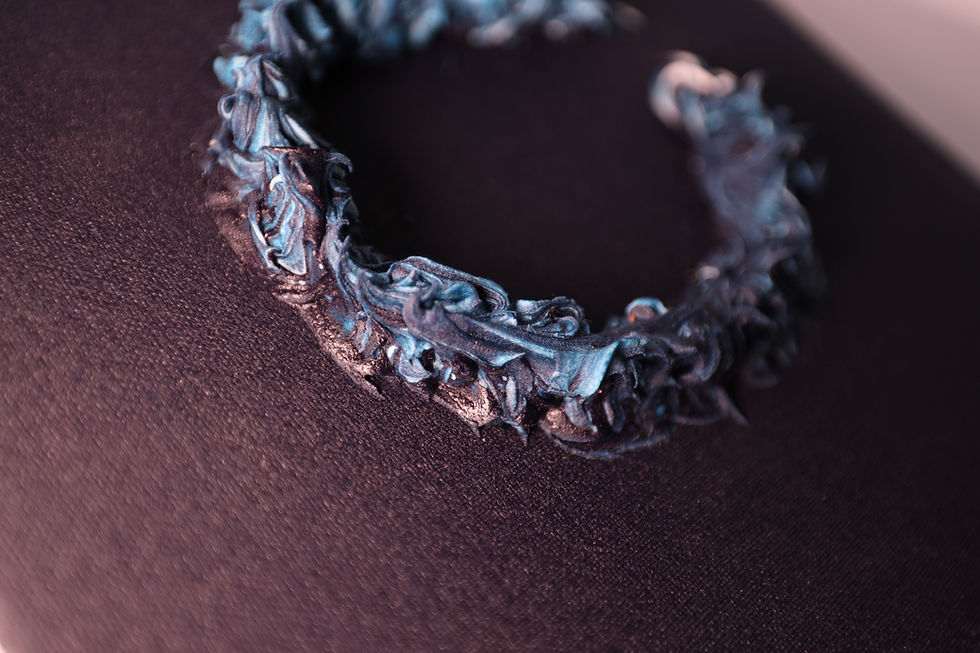
I work in acrylic because of what it lets me do structurally — hold a peak, resist collapsing, layer without cracking, dry fast enough that gesture stays visible. You can see the tool marks if you look closely. I leave them there on purpose. In black and white, those marks read almost like a record of the making — proof a hand did this, not a machine.
There's something calming in the repetition of building layer after layer and watching the shape emerge instead of planning it in advance. I came to this from years of doing repair work with my hands, and that rhythm never left me. The control isn't about getting a "correct" result. It's about showing up for the process and letting the material speak back.
What This Means for Your Space
Black and white doesn't compete with a room. It sits quietly until the light changes, and then it doesn't feel quiet at all. If you want something that reads as calm from across the room and reveals real depth up close — shadow, ridge, edge, tool mark — that's what this collection is built for. Not a print. Not a reproduction. One object, made once, that reacts to the room it's in.
If that resonates, take a look at the current collection — every piece is one of one.


Comments